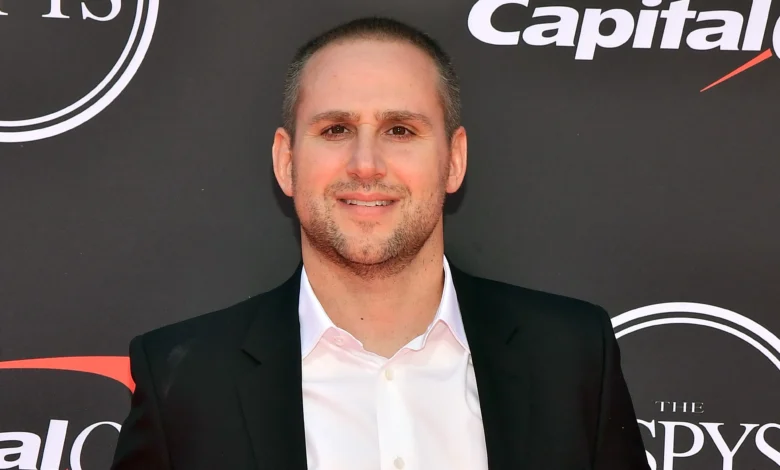
When you search for “Michael Rubin net worth”, you’re not just seeking a number — you’re exploring the story behind how a driven entrepreneur transformed early hustle into a multibillion‑dollar empire. In this article, we’ll dive into how Michael Rubin built his fortune, what his current estimated net worth is, and what lessons we can draw from his journey. By the end, you’ll understand the forces behind his wealth and what the term Michael Rubin net worth really represents in practice.
Early Life & Michael Rubin Net Worth
Michael Rubin was born on July 21, 1972, in Lafayette Hill, Pennsylvania. Raised in a Jewish household, his early foray into business came when he started a ski‑tuning shop in his parents’ basement at age 12. By age 14 he opened his own shop using bar mitzvah money and by 16 had run into serious debt (approximately $120,000) and had to restructure.
He enrolled briefly at Villanova University but dropped out after one semester to focus full‑time on his business operations. The early setbacks (bankruptcy in his teens) didn’t deter him; in fact, they helped build resilience and shaped his approach to risk and opportunity.
What this tells us: The roots of Michael Rubin net worth lie not in luck, but in early hustle, risk‑taking, and a willingness to learn from failure.
Building the Michael Rubin Net Worth: GSI Commerce & the eBay Sale
The next major chapter in Rubin’s journey was the founding of GSI Commerce (originally Global Sports Inc.) in 1998. GSI Commerce provided e‑commerce, logistics, and fulfillment services for large retailers at a time when online retail was just emerging — giving Rubin an early advantage.
In 2011, e‑commerce giant eBay acquired GSI Commerce for approximately $2.4 billion. This exit gave Rubin the capital and credibility to reinvest in bigger ventures.
But perhaps the smartest move was what he did after the sale: Rather than step back, Rubin kept key assets out of the sale and restructured into a new holding group, retaining control over what became his flagship venture: Fanatics.
Again: the key takeaway for “Michael Rubin net worth” is that major leaps came not just from exit, but from strategic reinvestment.
The Rise of Fanatics and the Modern Sports Commerce Empire
Fanatics is where Rubin’s wealth scaled. Founded (or restructured) after the GSI exit, Fanatics became a global digital sports‑platform company. It handles licensed sports merchandise, trading cards, collectibles, sports‑betting, and live commerce.
Key milestones:
- Fanatics secured exclusive licensing deals with major leagues such as the NFL, MLB, and worked with brands like Nike.
- It made big acquisitions, including the purchase of the iconic trading‑card company Topps in January 2022 for ~$500 million.
- The company’s valuation soared: by December 2022, Fanatics was valued at ~$31 billion.
Rubin’s stake in Fanatics (and his role as founder/CEO) is the central pillar behind his net worth. When you see “Michael Rubin net worth”, you’re essentially looking at the value of Fanatics plus his other business interests and investments.
How Much Is Michael Rubin’s Net Worth Today?
Estimating a private‑company‑heavy billionaire’s wealth is always approximate, but here’s what is generally reported:
- Rubin’s real‑time net worth is about $10.6 billion as of mid‑2025.
- Some profiles list around $10.63 billion.
- Others place his fortune at ~$11.5 billion as of 2024.
Bottom line: While the exact number fluctuates, it is safe to say the term Michael Rubin net worth refers to a figure in the $10 billion+ range.
Valuations of private companies like Fanatics shift often depending on funding rounds, debt, and revenue growth, so his net worth will move accordingly.
Key Drivers Behind the Growth of His Wealth
When analyzing how Michael Rubin net worth grew, several clear drivers emerge:
1. Vertical Integration & Ownership of the Supply Chain
Fanatics doesn’t simply retail licensed sports merchandise — it designs, manufactures, distributes, and controls much of the lifecycle, which gives higher margin potential.
2. Big Licensing Deals & Exclusive Partnerships
Securing exclusive rights with major sports leagues and brands gave Fanatics an edge.
3. Expansion into Adjacent Growth Markets
Beyond apparel and gear, Rubin has expanded into trading cards, digital collectibles, and sports betting/gaming.
4. Smart Exits, Retention of Key Assets
His decision to sell GSI Commerce but retain the key assets that became Fanatics shows strategic foresight.
5. Brand, Network & Timing
Rubin built a strong network in sports, retail, and investment. The timing — early e‑commerce, explosion of fandom, rise of digital collectibles — aligned with his entrepreneurial instincts.
Philanthropy, Lifestyle & Personal Ventures
When discussing Michael Rubin net worth, it’s not just the dollars—it’s also how he uses them.
Philanthropy
- Rubin co‑founded the REFORM Alliance in 2019 to work on criminal‑justice reform and parole/probation systems.
- During the COVID‑19 pandemic, he launched the “All In Challenge,” raising tens of millions of dollars to fight food insecurity.
Lifestyle & Personal Ventures
- Rubin splits time between the Philadelphia area, New York City, and Los Angeles.
- He’s known for high‑profile social events and networking, which feed both lifestyle and business.
- He also owned minority stakes in sports franchises, including the Philadelphia 76ers and the New Jersey Devils, though some were sold by 2022.
These facets help round out the story behind the figure known as Michael Rubin net worth—it’s not just accumulation, but influence, presence, and platforms.
Risks, Challenges & What’s Ahead
No success story is without its risks—especially one as complex as Rubin’s. Some of the challenges:
- Valuation uncertainty: Fanatics is privately held and depends on fundraising, investor perception, and market conditions.
- Revenue/margin pressures: While Fanatics has grown rapidly, there have been concerns about margins, especially as it expands into lower‑margin arenas like betting or collectibles.
- Regulatory risk: As sports betting and digital collectibles increase, regulatory and compliance risks grow.
- Competition & market shifts: Retail, sports fandom, and e‑commerce all evolve quickly — staying ahead is costly and risky.
On the upside: if Fanatics executes well, perhaps via IPO or continued expansion into global markets, the upside for Michael Rubin net worth remains significant.
Conclusion
So, what does Michael Rubin net worth truly reflect? It isn’t just a static number—it’s the outcome of decades of entrepreneurship, risk, reinvestment, strategic vision, and execution. From ski‑tuning in his parents’ basement to commanding an enterprise valued in the tens of billions, Michael Rubin’s journey teaches us about opportunity, timing, and vertical integration.
At present, his net worth sits around $10 billion+, driven mostly by his stake in Fanatics and his leadership of that business. He combines business savvy with social influence and philanthropy, making him a unique modern entrepreneur.
If you’re tracking “Michael Rubin net worth”, the key things to watch are: how Fanatics’ valuation evolves, how the adjacent verticals perform (cards, digital collectibles, betting), and how Rubin continues to reinvest and expand.
FAQ
Q1: What is Michael Rubin’s current net worth?
A: While estimates vary, as of mid‑2025 his net worth is commonly cited around $10.6 billion.
Q2: How did Michael Rubin make his wealth?
A: His wealth primarily comes from founding Fanatics, previously selling GSI Commerce to eBay, and retaining key assets to build a broader sports‑commerce ecosystem.
Q3: What companies has Michael Rubin founded or led?
A: He founded KPR Sports, Global Sports Inc / GSI Commerce, and is the founder/CEO of Fanatics. He also holds roles in other ventures like RueLaLa and Gilt.
Q4: What are the main risks to Michael Rubin’s net worth?
A: Key risks include valuation fluctuations of Fanatics, margin/competition pressures, regulatory risks especially in betting/gaming, and shifts in consumer behavior.
Q5: Does Michael Rubin engage in philanthropy?
A: Yes. He co‑founded the REFORM Alliance (criminal justice reform) and ran the All In Challenge (food insecurity during COVID‑19), among other initiatives.
You may also read